




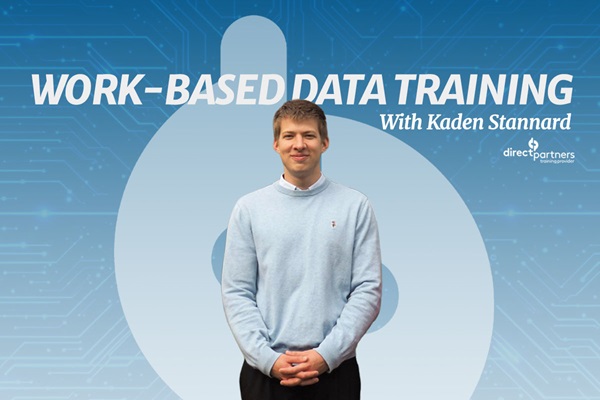
By Kaden Stannard, Data Analytics Assessor, Direct Partners Training Provider
As we are now part of a more data-focused world, the need to understand these principles have never been more at the forefront. People who have worked in jobs for decades can struggle to keep up with new information, processes and tools which can directly benefit the way they work. This is why the demand for external training qualifications has never been higher.
I will discuss my experience as a Data Assessor who works with people across industries to help them better understand the information they handle and how my experience studying for a University degree in Data Science compares to learners completing a Data Analytics SVQ qualification.
What does my role as a Data Assessor look like?
Learners undertaking SVQ qualifications can sometimes find it difficult to engage in SVQ work when they solely rely on self-motivation. My role as an assessor is to help with these struggles. This can be done through regular meetings to discuss progress and answering general course content questions. A barrier that could stump learners for weeks can be solved through regular communication from the assessor. Utilising 1-on-1 practical sessions for less experienced learners helps remove the fear of being a beginner and create self-confidence when learning new technical skills. Creating learning plans catered to a learner’s schedule can help them manage their learning around their personal and work life.
In my experience, motivation is created from human connection and having consistent communication allows relationships to be built and a learner’s motivation to grow. Learners’ goals start to be met as they feel accountable to a person who is responsible for their learning journey. This system, as opposed to a faceless deadline, I have found to be the driving force in progression through SVQ qualifications.
Degree vs SVQ: Two routes to the same skill
It has been eye-opening to see how the delivery method of these skills can have an impact on what people take away. The main difference to highlight is the practical application of knowledge and how it can be applied immediately when learning at work. It is great to dedicate full-time hours to understanding a skillset, but this knowledge can get lost when students don’t have an outlet to properly apply it in real settings. This is where the strengths of an SVQ qualification can stand out. Being able to practically apply data preprocessing steps to a messy spreadsheet used every day or building a dashboard from your own team’s figures, means the skill sticks in a way a textbook example rarely does. Learners aren’t just passing an assessment – they are solving a problem they actually encounter, which is often the moment when the knowledge clicks.
That said, the degree route has strengths of its own. University gave me the time and space to understand why the tools work, not just how to use them but rather focusing on the statistics and theory underneath the practices. It is a broader and deeper foundation and for some careers that grounding is exactly what’s needed. An SVQ meets learners where they already are: in a job, with real data, learning skills they can utilise immediately. Neither route is better than the other – they simply suit different people at different stages of their working lives.
The Data Analytics SVQ culminates in a work-based project for the final stage of the qualification, built from the learner’s own workplace data, with help from an experienced data analytics assessor. This is something that cannot be replicated in higher education. This, alongside a new look at a business problem through the analytical lens of a newly trained staff member, emphasises the advantages of work-based learning.
Workplace upskilling isn’t a short-term measure but increasingly how adults will keep pace for the rest of the decade.
Apply for our Data Analytics SVQ at:
https://directpartners.co.uk/our-services/modern-apprenticeships/data-analytics
Direct Partners is an award-winning training provider based in Edinburgh, delivering SDS-funded qualifications across Scotland. To find out more or discuss a partnership, visit directpartners.co.uk or call 0131 600 0820.
