


As Scotland moves into the pre-election period, regional Chamber manifestos may vary, but common priorities are coming into focus, business rates, infrastructure, housing and skills funding.
Political manifestos are never straightforward. They require a careful balance – reflecting the priorities of members without simply producing a long ‘shopping list’ of demands. This year, North Highland Chamber of Commerce chose to take a different approach.
Rather than setting out a series of asks in isolation, our manifesto focuses on how investment in the North Highlands can directly support the Scottish Government’s own ambitions. Ours is a region that has always punched above its weight. With the national focus on delivering a just transition to a green economy, our contribution will only grow in the years ahead.
While the Scottish Government has yet to set out its policy framework for 2026/27, its current Programme for Government centres on four key priorities: growing the economy, eradicating child poverty, tackling the climate emergency, and ensuring high-quality, sustainable public services. These priorities are not abstract for us – they are lived realities.
The North Highlands is a place where rural deprivation sits alongside extraordinary economic opportunity, particularly in clean energy. If we get policy right here, we can demonstrate in microcosm the transformative impact that targeted investment can deliver across Scotland.
As a business-led organisation, return on investment is central to our thinking. To underpin our manifesto, we commissioned the Fraser of Allander Institute to undertake detailed economic modelling focused specifically on Caithness and Sutherland. While a recent HIE report suggested that up to £100 billion of investment could flow into the Highlands and Islands in the coming decades – much of it linked to renewable energy – there has been little clarity on what share could be captured in the North Highlands. Until now.
The findings are striking:
Tourism was found to generate around £166 million in Gross Value Added each year and support nearly 5,000 full-time equivalent jobs.
Investment in port infrastructure could contribute £1.44 billion in GVA and more than 16,000 person-years of employment over 25 years.
The offshore wind sector has the potential to support up to £3 billion in regional economic activity and over 39,000 person-years of employment across its lifecycle.
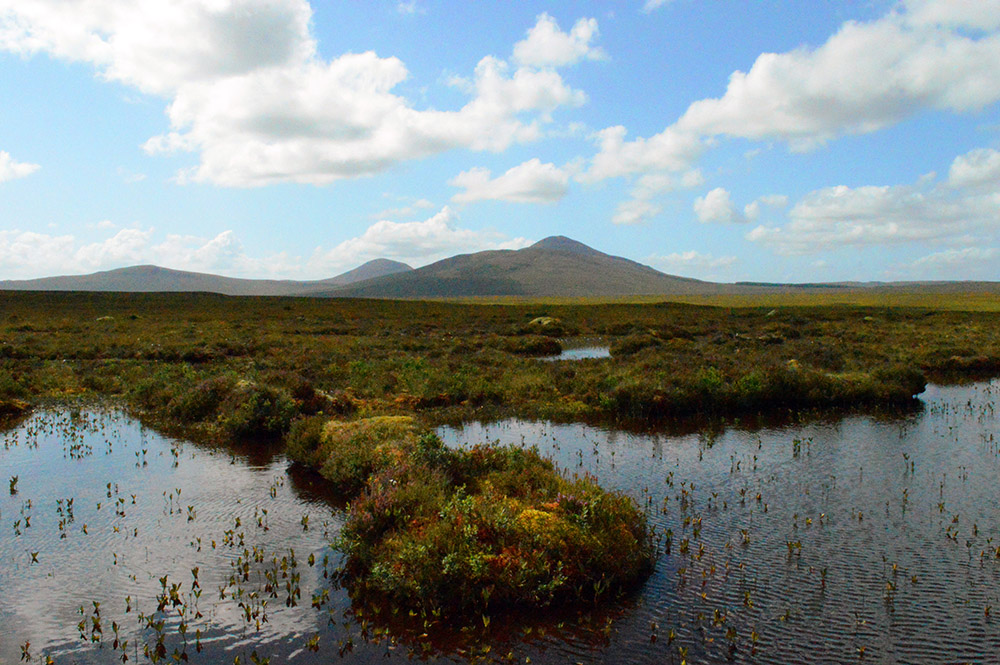
Peatland restoration linked to the Flow Country World Heritage Site could support over £70 million in economic activity and more than 1,200 jobs.
North Highland households spend around £24 million more each year on transport and heating than households elsewhere in Scotland. Addressing this could add £15 million to the local economy.
If we were to attract a population share in line with the national average, this could generate £7 million in additional annual spending and support around 60 jobs.
The opportunities for regional growth are seismic, but the heavy caveat to those figures is that those economic opportunities can only be realised with targeted investment and support. This requires co-ordinated action across government, public sector, industry, academia and our third sector partners.
That is why our manifesto calls for focused investment in the infrastructure that will unlock growth. Strategic transport and energy infrastructure are critical, alongside support for the development of our ports. Scrabster and Wick are ideally positioned to play a central role in offshore wind operations and maintenance, supported by lifeline air connections from Wick John O’Groats Airport.
These are not simply regional priorities. They are national enablers. Investing in the North Highlands will help Scotland meet its renewable energy targets and accelerate progress towards net zero. Establishing our region as a key hub in the energy transition will support not only offshore wind, but a broader, balanced energy mix – including new nuclear where appropriate – alongside the global significance of the Flow Country as a carbon sink.
At the same time, we must address the challenges of poverty and public services, which are often more acute in rural and dispersed communities such as north west and central Sutherland. Tackling these issues in the North Highlands means recognising the scale of the rural cost disadvantage and targeting meaningful support to address it.
It means delivering appropriate, affordable housing in line with the NorthWest2045 Vision and Kyle of Sutherland Development Trust’s Strategic Plan. It means investing in skills, apprenticeships and workforce development to ensure that local people can access the opportunities being created. And it means resisting the ongoing pull of centralisation, which risks accelerating population decline at precisely the moment when our growth sectors – renewables, conservation and tourism – should be helping to attract and retain talent.
Our manifesto is unashamedly optimistic. Our members live and work here; they understand both the challenges and the extraordinary opportunities ahead.
But it is also grounded in pragmatism. The message to government is clear and consistent throughout: delivering for the North Highlands means delivering for Scotland.
We look forward to working in partnership to turn that ambition into reality.
