




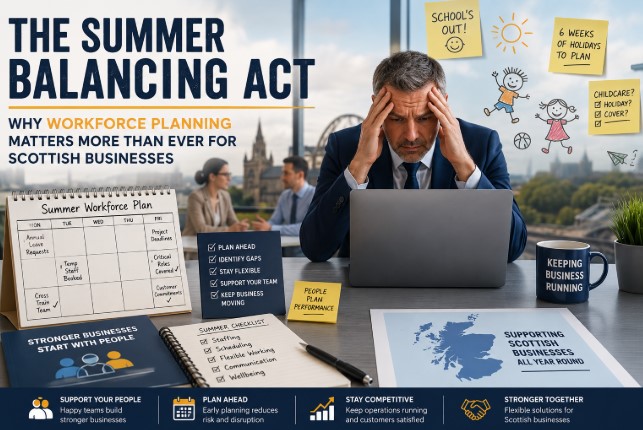
From 30th June, schools across Scotland will close their doors for six weeks of summer holidays. For children, it marks the start of freedom, family adventures, and a well-earned break. For many Scottish businesses, however, it signals the beginning of one of the year’s biggest workforce challenges.
Every summer, employers face the same balancing act: maintaining productivity, customer service, project deadlines, and operational continuity while managing increased annual leave requests and supporting employees with childcare responsibilities.
For SMEs in particular, the impact can be significant.
Unlike larger organisations with extensive resource pools, many smaller businesses operate with lean teams where the absence of even one or two key employees can place additional pressure on colleagues and day-to-day operations. At the same time, businesses want to support their employees and recognise the importance of family commitments during the school holidays.
The challenge is finding the right balance.
Across sectors including manufacturing, construction, logistics, administration, hospitality, finance, healthcare, and professional services, customer expectations do not pause for the summer. Projects still need delivered, clients still require support, orders still need fulfilled, and business targets remain in place.
For many employers, the summer period has become less about managing holidays and more about managing risk.
Without effective workforce planning, businesses can find themselves facing reduced productivity, increased workloads for remaining staff, delayed projects, and unnecessary pressure on management teams. Forward planning has therefore become a crucial part of maintaining business performance during the holiday season.
The organisations that navigate summer most successfully are often those that prepare early. Reviewing staffing requirements, identifying potential gaps, cross-training employees, implementing flexible working arrangements, and engaging temporary staff where required can significantly reduce disruption and provide valuable business continuity.
Importantly, supporting employees through the summer months is not simply a people issue — it is a business issue. Organisations that demonstrate flexibility and understanding often benefit from improved employee engagement, stronger retention, and a more positive workplace culture.
At a time when attracting and retaining talent remains a priority for many Scottish businesses, supporting employees through life’s everyday challenges can make a meaningful difference.
The summer holidays serve as an annual reminder that successful businesses are built around people. Employees are not only workers; they are parents, carers, partners, and family members balancing competing priorities.
For employers, the key message is clear: plan ahead, remain flexible, and put the right support in place early.
Because whilst schools may close for the summer, business certainly doesn’t.
