



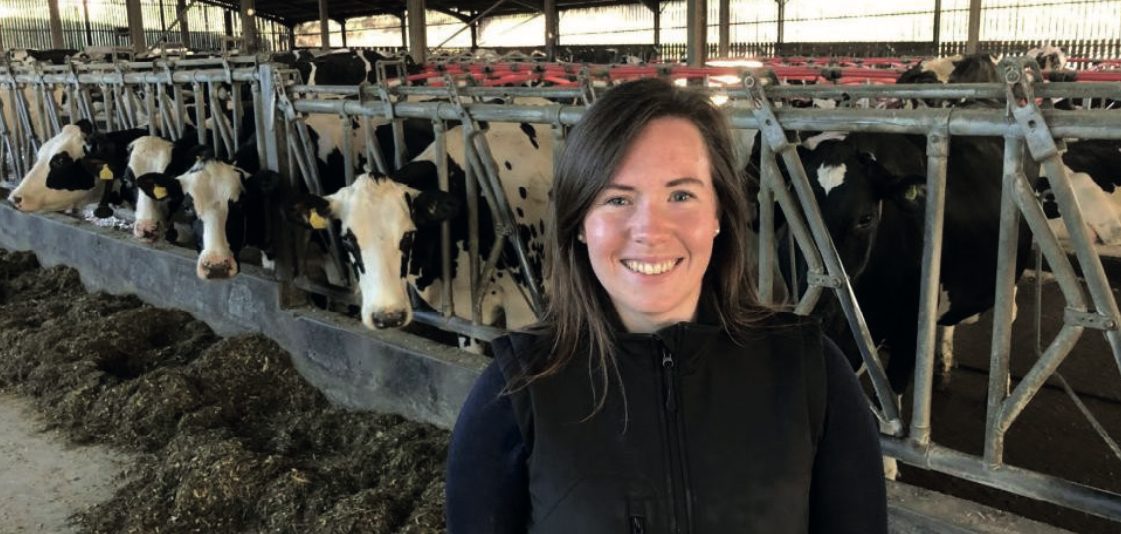
A conversation with Lucy Little and Rachael Snody-Scott, Agents of NFU Mutual – Inverness and Elgin Agency.
A farm adding holiday accommodation. A business dealing with a cyber incident. A family company preparing to hand over to the next generation.
At first glance, they sound like separate business issues. In practice, they are often connected by the same underlying question: how is this business changing, and what else does that affect?
That question sits at the heart of many conversations Lucy Little and Rachael Snody-Scott have as self-employed
Agents of NFU Mutual. Their work is not simply about looking at one policy or one immediate problem. It’s about understanding how real businesses operate, how they evolve and where one decision can quietly affect another.
“Business owners rarely come to us with neat, single-issue questions,” says Lucy. “They are making practical decisions about growth, succession, staffing, property, diversification and investment. Those decisions can all affect the protection they need. Our responsibility as Agents is to help them see the wider picture.”
Cyber risk beyond the tech sector
As more small businesses move bookings, payments, accounts and customer records online, cyber risk has moved well beyond sectors that might expect it.
For a small business, a cyber incident can quickly become an operational issue, a customer issue, a reputational issue and a financial one. It may affect trading, cashflow, communication and confidence.
“If you have email, online banking or customer data, you have exposure,” says Rachael. “It does not matter whether you run a shop, a guesthouse, a farm business or any other business. A cyber incident can stop you operating very quickly.”
That is why the conversation often needs to go beyond systems and software. The technical issue may be the starting point, but the business impact is usually broader.
Succession is rarely one conversation
Generational handover is another area where the practical and emotional sides of business ownership meet.
A handover may involve property, vehicles, employees, business structure, long-standing customers and family relationships. It may also involve difficult conversations that have been put off for years.
“Succession is rarely one conversation,” says Lucy. “It’s usually a series of conversations over time. Someone may be thinking about stepping back, or a son or daughter may be taking on more responsibility. The earlier those conversations begin, the easier it is to understand what may need to change.”
For many businesses, succession is not just about who takes over. It’s about continuity, confidence and making sure the business is properly prepared for the next stage.
Diversifying without losing sight of risk
Diversification has become a familiar story for many rural and family businesses. A farm may add holiday lets. A retailer may start selling online. A hospitality business may introduce events. A business may add a new income stream that looks simple on the surface but changes the way it operates.
“It’s rarely one big decision,” Lucy explains. “It’s often a few smaller ones. A new income stream here, a change in how people use the premises there. Together, those decisions can shift the risk profile more than people expect.”
A farm stay, cafe, event space or online shop can all change the way a business needs to think about people, premises, vehicles, public access, income and continuity.
Why breadth matters
Cyber, succession and diversification may sound like separate topics. But for many businesses, they are connected by the same underlying shift: the business is changing, and someone needs to help them see what that means before it becomes a problem.
A specialist may look deeply at one area. That expertise matters. But business owners also need people who can step back and see how different decisions fit together.
Agents of NFU Mutual are often close enough to local businesses and communities to spot those connections in real time.
“People are sometimes surprised by how diverse an Agent’s responsibilities are” says Lucy. “Cyber one day, succession the next, then a diversification plan. You need a genuine head for business and finance, not just an understanding of one product area.”
Rachael agrees: “It comes down to being commercially minded, good with people and properly embedded in the local network. That is what allows you to understand the business, not just the immediate question in front of you.”
It’s work that suits a particular kind of person: someone who enjoys understanding how businesses really operate, who can think across problems rather than within narrow silos, and who would rather build long-term relationships than chase short-term transactions.
